The house that raised your family holds decades of furniture, paperwork, tools and keepsakes, and the next home has room for a fraction of it. Most people stall on downsizing because every drawer turns into a decision. A clear downsizing checklist breaks that work into smaller steps, so you decide once, room by room, and arrive at the new place with only what you will use and love.
- Start With the Floor Plan of Your Next Home
- A Downsizing Checklist, Room by Room
- Keep, Give, Sell or Let Go
- Heirlooms and Family Conversations
- Planning Moving Day for a Smaller Home
- Frequently Asked Questions
Start With the Floor Plan of Your Next Home
The easiest way to decide what comes with you is to know exactly where it will go. Before sorting a single closet, get the floor plan of the new home, or measure each room yourself, and note the doorways, window walls and closet sizes.
Then measure the pieces you are hoping to keep: the sofa, the dining table, the beds, the dressers and any large cabinet. Sketch them onto the plan, even roughly on graph paper. A dining table that seats ten will not fit a nook built for four, and a king bed can leave no room to open a closet in a smaller bedroom.
This step settles a lot of arguments before they start. If the plan shows one living room wall long enough for a sofa, only one sofa comes. If there is no basement, the second freezer and the workshop bench need a new home. Measuring first turns emotional choices into practical ones, and it gives every family member the same facts to work from.
A Downsizing Checklist, Room by Room
Work through the house one room at a time, and finish each room before opening the next. Start with the spaces you use least, such as the basement, garage or spare bedroom, so you build momentum before reaching the rooms that hold the most memories.
- Kitchen: keep one set of everyday dishes and the pots you actually cook with. Duplicate appliances and holiday serving pieces are usually the first to go.
- Bedrooms: match beds and dressers to the new rooms on your plan. Sort clothing by what you have worn in the past year.
- Living and dining rooms: choose the seating and tables that fit the new layout, then decide on artwork and lamps.
- Garage and basement: tools, sporting gear and paint cans need a clear plan, especially if the new home has no garage.
- Paperwork: keep legal, tax and medical records together in one labelled box that travels with you, not on the truck.
Give each room its own date on the calendar. Spreading the work over several weeks keeps it from becoming one exhausting weekend.
Keep, Give, Sell or Let Go
Every item ends up in one of four places, so set up four clearly marked zones in the house: keep, give to family, sell or donate, and let go. Coloured stickers or painter’s tape on larger furniture work well, because everyone can see the decision at a glance.
A few questions make the calls faster. Have you used it in the last year? Does it have a spot on the new floor plan? Would you buy it again today? If the answer to all three is no, it probably does not need to come along.
The “let go” pile is often the largest, and it is the one that lingers in the garage for months. Our junk removal service can clear old furniture, broken appliances and the leftovers from a long-lived household, so the house is ready for its next owners.
Keep items you plan to sell or donate in their own zone, away from the keep pile, so nothing ends up on the moving truck by mistake.
Heirlooms and Family Conversations
The hardest part of downsizing a family home is rarely the furniture. It is the china cabinet that belonged to a grandparent, the children’s artwork, the photo albums and the piano everyone learned on. These items carry stories, and deciding their future is easier when the family decides together.
Invite adult children or relatives to walk through the house early, before the sorting is finished, and ask them to name the pieces they would like. Set a date for them to collect those items. Anything not claimed by then goes back into the regular sorting process.
For keepsakes that will not fit, take photographs before letting them go, or keep one small box of the most meaningful pieces. Large heirlooms that are moving to a relative’s home still need careful handling, and our piano movers can take a family piano to a child’s home as part of the move.
Planning Moving Day for a Smaller Home
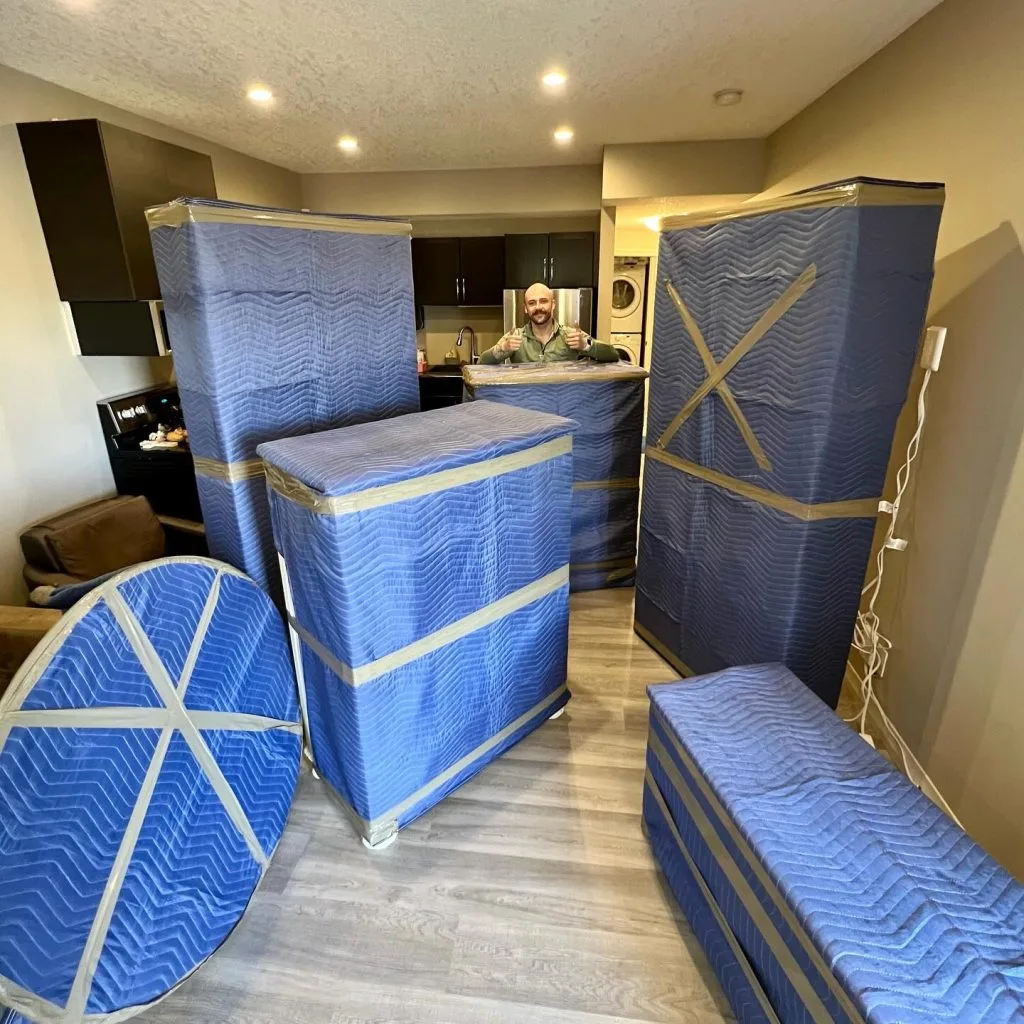
Once the sorting is done, the move itself is smaller, but it still needs a plan. Label every box with the room it belongs to in the new home, using the same names as your floor plan, so the crew can place it where it goes on the first trip.
Ask your mover to see the house before the move so the quote reflects what is really coming. Skyline Moving Services offers residential movers for full household moves, and our furniture movers can handle single pieces going to family members on a different day. A smaller home often means some new furniture too, and furniture assembly saves an afternoon of reading instructions after a long day.
Pack an essentials box for the first night: medications, a change of clothes, bedding, a kettle and phone chargers. Keep it in your car, not on the truck.
Downsizing works best with a calm, unhurried crew who treat the old home and the new one with care. Skyline Moving Services is fully licensed and insured, and our team pays close attention to detail on every move, from the first walkthrough to the last piece of furniture placed in the new room. Once your downsizing checklist is done, get in touch with our moving company to book a quote, and we will plan the move around the pieces you have chosen to keep.
Frequently Asked Questions
How far ahead should I start downsizing?
Start as soon as you know you are moving, ideally several weeks before the move date. A family home with decades of belongings takes longer to sort than most people expect, and spreading the work out keeps each decision calm.
What should be on a downsizing checklist?
A good downsizing checklist covers measuring the new home, sorting each room, choosing what to keep, give, sell or discard, handling heirlooms, and booking the move. Work through it in that order so each step builds on the last.
Which room should I sort first?
Sort the room you use least first, usually the basement, garage or a spare bedroom. Those spaces hold fewer emotional items, which makes the kitchen, bedrooms and family keepsakes easier to face later.
Can you remove the furniture we are not keeping?
Yes, junk removal is one of the services Skyline Moving Services offers. We can take away the old furniture and household items that are not coming with you, on moving day or before it.
How do we decide who gets family heirlooms?
Ask family members to walk through the home early and name the pieces they want, then set a pickup date. Anything unclaimed by that date goes back into the normal keep, sell or donate sorting.
Do you help seniors moving to a smaller home?
Yes, senior moving is one of our services. We plan the move around the pieces being kept and place furniture where it belongs in the new home.