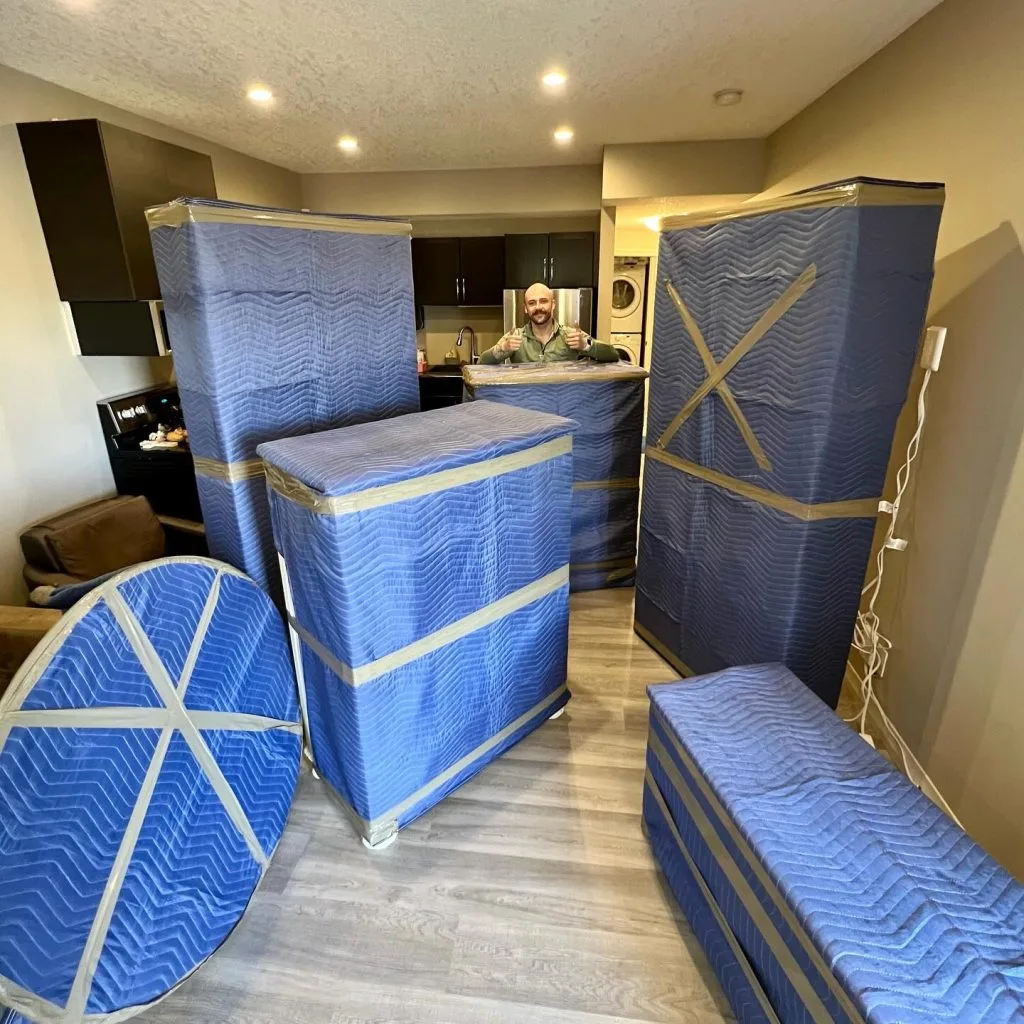
Moving into a condo is different from moving into a house. You share an elevator, a loading area and hallways with your neighbours, and the building usually decides when you can move and how. A missed booking or a rule nobody read can hold up a condo move for hours. These condo moving tips cover the elevator, the move-in booking and the building rules, so moving day runs on time.
- Book the Elevator and Loading Area Early
- Read the Building Rules Before Moving Day
- Measure Doorways, Hallways and the Elevator
- Packing and Loading for a Condo Move
- Moving Day in a Shared Building
- Frequently Asked Questions
Book the Elevator and Loading Area Early
In most condo buildings, the elevator is the single most important booking of the move. Many buildings reserve one elevator for moves and ask residents to book it ahead through the property manager, the concierge or a resident portal. Popular dates, such as the end and start of the month, can fill up quickly.
As soon as you have a possession date, contact the building and ask how move bookings work. Find out which elevator is used for moves, how long a booking lasts, and whether the loading dock or a parking spot near the entrance needs its own reservation.
If you are leaving a condo as well as moving into one, you need two bookings, one at each building, and the times have to line up. Book the move-out first, then the move-in, and leave enough room between them for the drive and unloading. Once both are confirmed, share the times with your mover so the crew is scheduled around them.
Read the Building Rules Before Moving Day
Every condo building sets its own move rules, usually through the condo board and the property manager. Ask for them in writing well before the move, because they vary a great deal from one building to the next.
The questions worth asking are:
- Which days and hours are moves allowed?
- Is a damage deposit or a move fee required, and how is it returned?
- Does the building need any paperwork from the moving company, such as proof of insurance?
- Must elevator pads or floor protection be in place, and who installs them?
- Where can the moving truck park, and is there a height limit at the loading entrance?
- Who needs to be present to open the elevator or the loading door?
Write down the answers and pass them on when you book your mover. Skyline Moving Services is fully licensed and insured, and knowing the building’s requirements ahead of time lets us plan around them before moving day.
Measure Doorways, Hallways and the Elevator
Condos are built for efficient use of space, which can make large furniture hard to get in. A sofa that fit through the front door of a house may not make the turn from a narrow hallway into a condo entry.
Measure the inside of the elevator, including its height and the depth from the door to the back wall. Then measure the hallway width, the unit’s front door, and any tight corners on the way to the bedrooms. Compare those numbers with your largest pieces: sofas, sectionals, mattresses, dressers and dining tables.
If a piece looks too big, it can sometimes be taken apart. Bed frames, tables and sectional sofas often come apart for the move. Our furniture movers can take down large pieces before the trip, and furniture assembly puts them back together in the new unit. If something simply will not fit the new space, our junk removal team can take it away rather than leaving it in the old home.
Packing and Loading for a Condo Move
With a limited elevator booking, every trip counts. The aim is to fill each elevator ride and keep the crew moving, so how you pack matters more than it would in a house with a driveway.
- Use standard box sizes. Uniform boxes stack neatly on a dolly and fill the elevator efficiently.
- Finish packing before the booking starts. Time spent taping boxes is time the elevator sits idle.
- Label boxes by room. In a smaller unit, boxes placed in the wrong room quickly block the hallway.
- Keep heavy boxes small. Books and kitchen items in small boxes are easier to move through tight spaces.
- Plan the order. Furniture for the far rooms goes in first, so the entry stays clear for the rest.
Downsizing before the move helps too. Condos often have less storage than a house, so sorting out what you will not use before packing means fewer elevator trips and a less crowded unit on the first night.
Moving Day in a Shared Building
On the day, the building is still home to everyone else. A good condo move keeps the lobby and hallways clear, protects the walls and floors, and finishes inside the booked time.
Arrive early to meet the concierge or property manager, and confirm that the elevator is keyed for the move and the pads are up. Let your neighbours on the same floor know the date if the building allows notices, since hallways will be busier than usual for a few hours.
Keep the keys, fobs and parking passes for both buildings in one place you can reach easily. Once the last box is in, walk the common areas with the building staff, if they ask for it, so any deposit can be returned without questions. Our residential movers are used to working within booked windows and shared spaces, and we treat the building with the same care as your belongings.
A condo move goes best when the building’s rules, the elevator booking and the crew’s schedule all line up. Our team is punctual, friendly and careful with every detail, from the elevator pads to the last piece of furniture placed in your new unit. When you have your move-in date and the building’s requirements, contact our moving company for a quote and we will plan the move around your booked times.
Frequently Asked Questions
Do I need to book the elevator for a condo move?
In most condo buildings, yes. Moves usually require an elevator booking through the property manager or concierge, so ask the building how bookings work as soon as you have a move date.
What are the most useful condo moving tips?
Book the elevator early, get the building’s move rules in writing, measure the elevator and doorways, and finish packing before your booking starts. Those four steps prevent most condo moving day problems.
Will my condo charge a move-in deposit?
It depends on the building. Some condos ask for a damage deposit or a move fee and others do not, so ask the property manager what applies and how it is returned.
What if my sofa does not fit in the elevator?
It can often be taken apart. Many sofas, sectionals and bed frames come apart for the move and are reassembled in the new unit, so measure early and tell us about large pieces when we quote.
What should I give my mover before a condo move?
Give us your elevator booking times, the building’s move rules, parking and loading details, and any paperwork the property manager has asked for. With those, we can schedule the crew to fit your booking.